The Pitch: Free Wi-Fi for Everyone, Everywhere
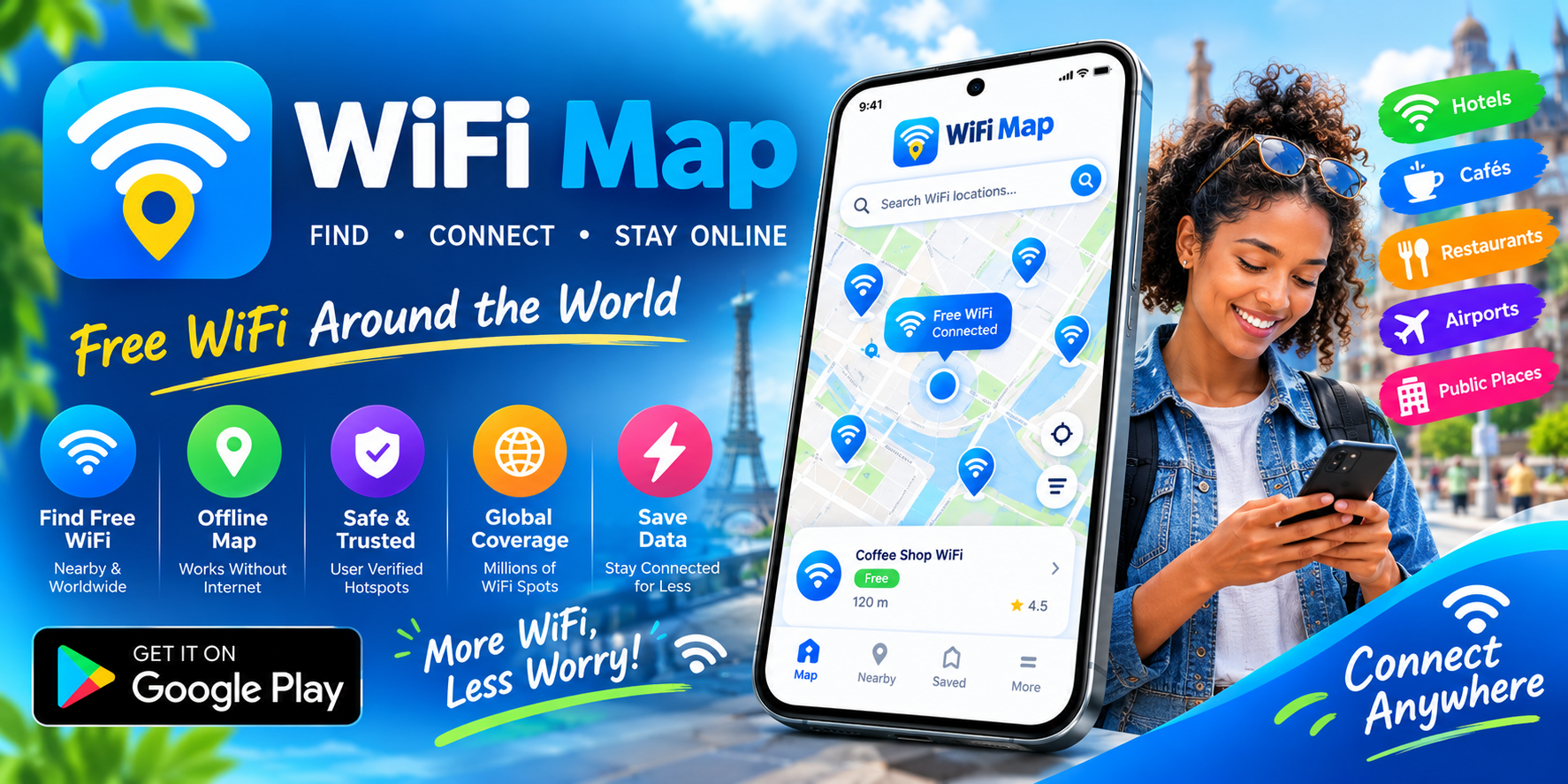
WiFi Map has a seductive promise: never pay for internet access again. The app bills itself as the world's largest Wi-Fi community, with a crowdsourced database of over 150 million hotspots across more than 200 countries . The concept is elegant—users share Wi-Fi passwords and hotspot locations, and in return, everyone gets free connectivity. It's a digital commons built on mutual generosity.
The app has the numbers to back up its popularity: 2.96 million reviews on Google Play, with a 4.4-star average . It's been downloaded over 100 million times and has become a staple for travelers, digital nomads, and anyone trying to avoid roaming charges . The founder, Denis Sklyarov, started the project in 2014 after experiencing the stress of finding internet while traveling . By that measure, WiFi Map has succeeded spectacularly.
But in the world of privacy and security, success at scale often comes with hidden costs. And WiFi Map's costs are substantial.
What You Actually Get: Features That Deliver
Let's give credit where it's due. WiFi Map's core functionality is genuinely useful. When it works, it works well.
- Global hotspot database: 150 million Wi-Fi locations, with passwords when available
- Offline maps: Download city maps before you travel so you can find hotspots without an internet connection
- VPN integration: A built-in VPN for secure browsing on public networks (premium feature)
- eSIM packages: Data plans for over 70 countries, available for purchase in-app
- Speed testing: Check connection quality before you commit to a hotspot
- Points and rewards: Contribute hotspots and earn points, with perks like ad removal at 1,000 points
The offline maps feature is particularly praised by users. One reviewer noted it "saved me countless times when landing in a new country without a local SIM card" . For travelers, that alone can justify the download.
The Privacy Problem: 11 Trackers and 31 Permissions
Here's where the story takes a dark turn. Independent privacy audit platform εxodus analyzed the latest version of WiFi Map (8.6.33) and found 11 embedded trackers spanning advertising, analytics, profiling, and identification categories .
For context, εxodus defines a tracker as "a piece of software meant to collect data about you or your usages" . Eleven trackers in a single app is a lot—especially for an app that claims to protect your privacy on public networks.
The permission list is equally concerning. WiFi Map requests 31 permissions, many flagged as "Dangerous" or "Special" by Google's protection levels :
- ACCESS_BACKGROUND_LOCATION: Track your location even when the app isn't open
- ACCESS_FINE_LOCATION: Precise GPS location
- RECORD_AUDIO: Access to your microphone
- READ_PHONE_STATE: Access to phone status and identity
- CAMERA: Take pictures and videos
- READ_EXTERNAL_STORAGE / WRITE_EXTERNAL_STORAGE: Read and modify files on your device
- ACCESS_ADSERVICES_AD_ID, ATTRIBUTION, TOPICS: Advertising-related permissions for tracking and targeting
Some of these permissions are necessary for core functionality—location for finding nearby hotspots, Wi-Fi state for connecting to networks. But RECORD_AUDIO, READ_PHONE_STATE, and the advertising permissions have nothing to do with finding free Wi-Fi. Their presence raises uncomfortable questions about what else the app is doing.
The Google Play data safety section claims the app does not collect any data and does not share data with third parties . The εxodus findings directly contradict this claim. While static analysis doesn't prove the trackers are actively collecting data, it does prove the infrastructure is there .
The Subscription Trap: Free Trial, Paid Reality
WiFi Map's monetization model has generated significant user frustration. The app offers a 3-day free trial, but many users report being charged without realizing the trial had ended .
One user wrote: "Rubbish app, bad features, and it charges! It said free trial, then it really charged me! Scammed me out of RM82.99" . The developer's response was predictable: the trial terms were disclosed, and refunds must be requested through Google Play .
To be fair, WiFi Map's help center does explain how to cancel a free trial, and the company has issued refunds in some cases . But the pattern of complaints suggests the trial-to-subscription conversion is aggressive, and many users feel misled.
The subscription prices vary wildly by region, with annual plans ranging from $5.99 to $69.99 and weekly plans around $3.99 to $8.99 . The variance itself is a red flag—dynamic pricing based on user location and willingness to pay is standard for subscription apps, but it means two users in different countries can pay drastically different amounts for the same service.
Regional Limitations: Where WiFi Map Doesn't Work
The app's usefulness depends entirely on community contributions. In regions where few users have added hotspots, WiFi Map is essentially useless.
A Chinese user complained: "WiFi Map seems to have no use in mainland China, maybe it's better in Hong Kong, Macau, Taiwan, or other regions abroad. I can hardly find any free hotspots, and there are so many ads" . The developer's response was technically correct—the app relies on user contributions, and if nobody has added hotspots in your area, the map will be empty .
This limitation is inherent to the crowdsourced model. WiFi Map works brilliantly in tourist-heavy areas of Europe, Southeast Asia, and major cities where travelers have contributed data. In less-trafficked regions, it's a ghost town.
Russian users on RuStore were even more blunt. With a 2.8-star rating from just 13 reviews, the app was described as "nothing works" and "doesn't even start" by multiple users . While RuStore reviews represent a tiny sample, they suggest the app has reliability issues in some markets.
The Business Model: How Free Wi-Fi Stays Free
WiFi Map's founder has been transparent about the business model: ads represent 20–30% of annual revenue, with the rest coming from eSIM sales and premium subscriptions .
"We believe connectivity is a basic human need," Sklyarov said. "And we wanted to make sure access stayed free. And that's where ads come in" . The company uses Google AdMob and Ad Manager, and users who reach 1,000 contribution points get ads disabled as a reward .
This is a legitimate model. Free apps need revenue, and advertising is a common path. But the combination of ads and 11 trackers and 31 permissions creates a data collection ecosystem that goes well beyond "showing some ads." The advertising permissions requested by the app—ACCESS_ADSERVICES_AD_ID, ACCESS_ADSERVICES_ATTRIBUTION, ACCESS_ADSERVICES_TOPICS—are specifically designed for tracking users across apps and building detailed profiles .
In other words, you're not just paying with your attention. You're paying with your data.
The Verdict: Useful, But Understand the Trade-Off
WiFi Map is a genuinely useful tool that solves a real problem. For travelers who need connectivity in unfamiliar places, the offline maps and hotspot database can be lifesavers. The community-driven model is clever, and the app's scale means it actually works in many parts of the world.
But the privacy trade-offs are significant and poorly disclosed. The app claims to collect no data while containing 11 trackers. It requests microphone and phone state permissions that have no apparent connection to finding Wi-Fi. And its subscription model has generated enough user complaints to suggest a pattern of aggressive monetization.
Here's who should consider WiFi Map:
- Frequent travelers who understand the privacy trade-offs and need connectivity in a pinch
- Users who contribute actively to earn points and disable ads
- Anyone who treats it as one tool among many rather than a primary connectivity solution
And here's who should avoid it:
- Privacy-conscious users who object to extensive tracking and permissions
- Anyone in regions with sparse hotspot coverage where the app won't help
- Users who struggle with subscription management and risk unwanted charges
WiFi Map isn't malicious. It's a business trying to balance free access with revenue. But the balance it's struck prioritizes growth and monetization over transparency and user privacy. If you download it, go in with open eyes—and maybe turn off background location access the moment you're done using it.